This time I didn’t need to explain to anyone what WOKE was and lots of people wanted to know where they could buy the design. (Visit my Redbubble Shop) I guess people are waking up. (pun intended)
The panel was a lot of fun with great questions from the audience. We probably could have used another 45 minutes.
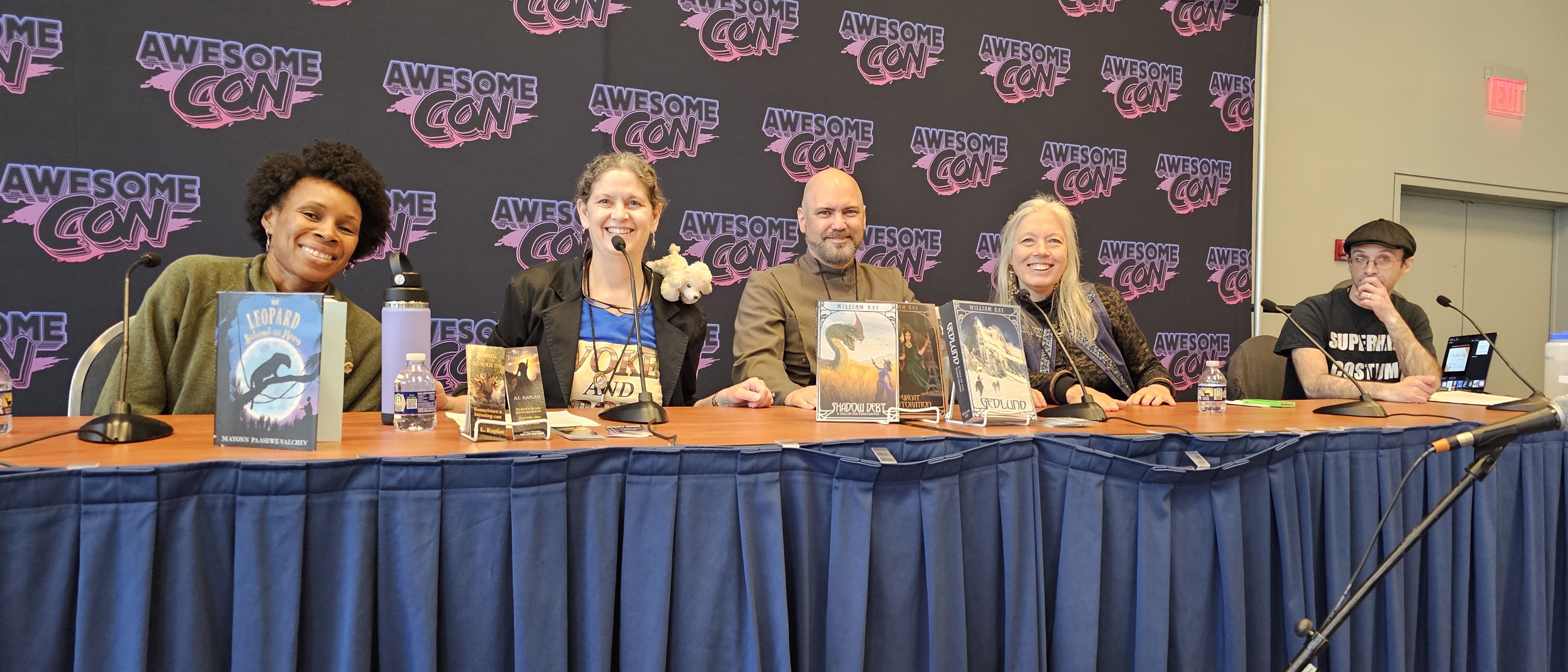
Pictured from right to left: Mayonn Paasewe-Valchev, A. L. Kaplan, William Ray, Katie Aiken Ritter, Harrison Demchick
Is is photo was taken 10 minutes before the panel began. (9:45 on a Saturday morning!) By the time the panel started, there were no empty chairs. I didn’t crop the picture so you could see the scale of the room.
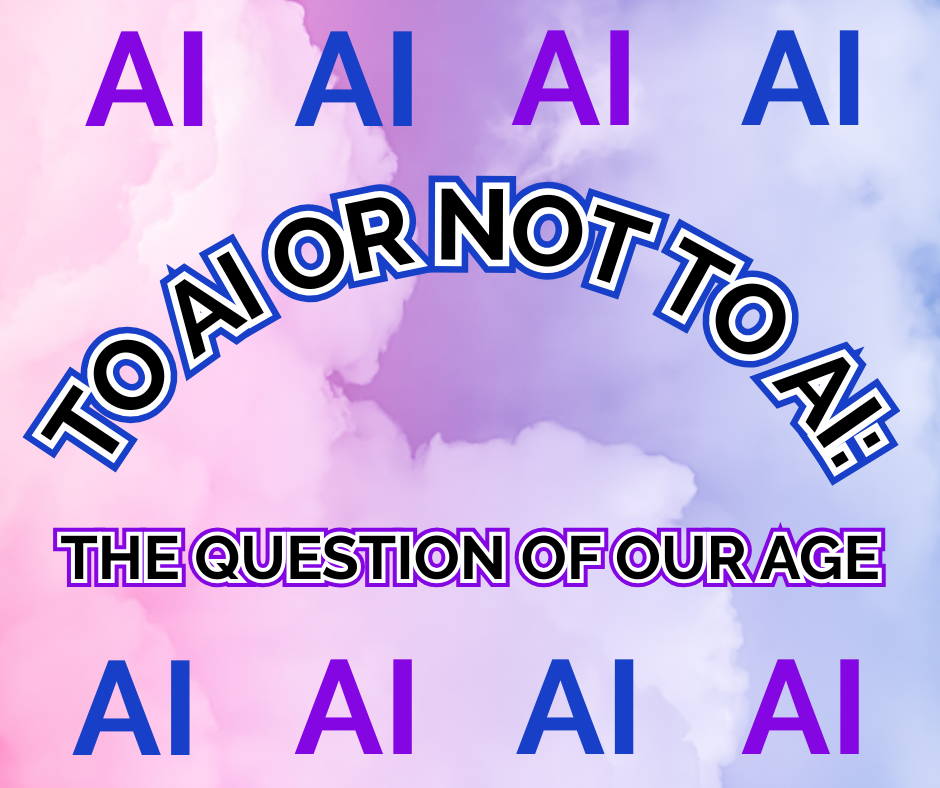
There’s been a lot of talk lately about the use of AI in the literary world. Some say it’s okay, right? Well…. There are a few things you should know before you dive into this technology.
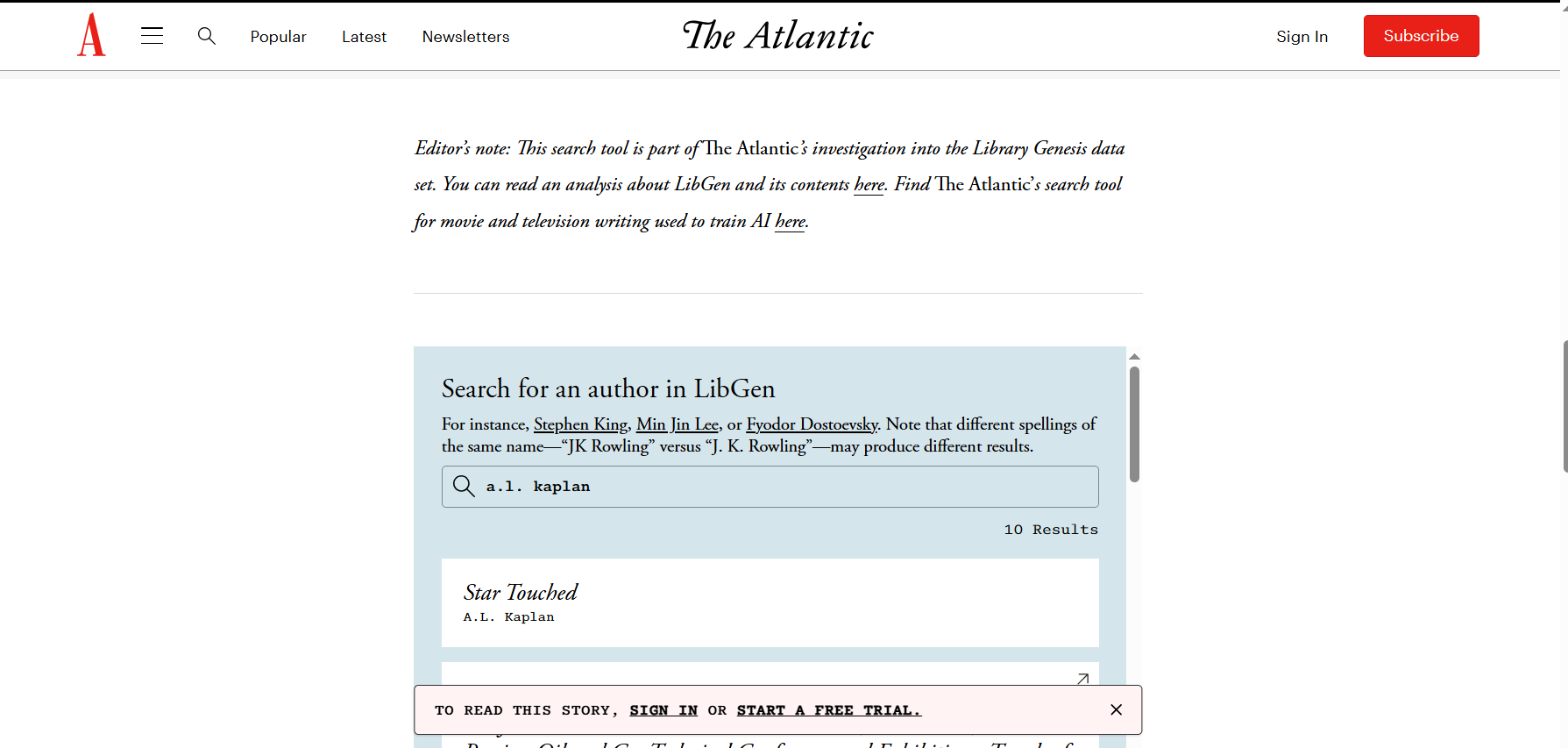
In training their artificial intelligence platforms, the creators of AI software used other people’s writing without permission. By that, I mean they did not ask authors or even publishers if they could use the work. They did not purchase any of these books. They simply stole writing from authors. We are not talking about pieces that are out of copyright and in open domain, but contemporary books from authors currently writing and selling their creations. These are facts. I know authors affected by such theft.
Publishing is hard and costs money, especially if you are self-publishing. There’s professional editing, ISBN numbers [unless you are using the free ones from Amazon, but then big bookstores and independent bookstores won’t carry your books], printing, and the dreaded marketing. And what best sells your book? Why a cover of course, and purchasing a cover can be expensive, although I have seen some as low as $50. This all makes using AI to generate your cover very tempting. Which brings me back to how they trained that AI.
Stop now and ask yourself, how did they teach those machines? They took images from museums and from all over the internet, including art for sale and personal photos,without asking permission. I majored in Art [MFA Sculpture w/ceramics minor] so perhaps I have a slightly biased opinion, but this rankles the artist in me.
Let’s say you used AI to create your cover. Can you copy-write that creation? The answer is no. Legally it is not your art. You did not create it; it was generated by someone else. In this case an AI. Should you mention that on your copyright page? Yes.
I get the need to watch budgets. When I published my short stories, I created the covers using a program called GIMP, which is a free photo manipulation program. It is similar to Adobe Photoshop. I’m not going to go into the details of how it works here, that would be another article. I use my own photographs or get permission from other photographers to use theirs. The rest is drawn using the tools in the program. Even with the benefit of an art background, which gives me a slight edge, it is still hard work. I am proud of what I create.
Now let’s look at publishing markets. When AI-generated writing first came out, it wasn’t particularly good, but that didn’t stop people from inundating publishers with their dreck. So much so that many publishers were forced to temporarily close their doors to submissions while they figured out a way to sort through them. Now, every one of the markets I have seen clearly states that they do not accept anything AI generated; so, you had better check where you want to submit before jumping into this technology.
Within MWA, AI generated writing and art cannot be submitted to Pen in Hand. Nor are they eligible for our contests. Even Amazon now asks if AI was used. Authors are also adding language to their copyright pages explicitly saying their work may not be used to train AI. Here is an example:
“No part of this book may be used or reproduced in any manner for the purpose of training artificial intelligence technologies or systems.”
AI and its use in various markets is rapidly changing. You will have to decide where you stand, but really, why would you want AI to do your work? The whole reason I became a writer/artist was to bring my creations to life and share them with the world. Yes, it’s hard, and I’ve struggled at times, but creating is what I do. Why hand that off to a machine? I can see where it may be helpful to generate a writing prompt, but any writing should be done by you. Images should come from you, not a program. You are the creator. Leave the AI for self-driving cars and medical procedures.
This article was originally published in the Maryland Writers’ Association 2025 Spring Newsletter.
“Clause Relating to Authors’ Use of AI Authors shall not be required to use generative AI or to work from AI-generated text. Authors shall disclose to Publisher if any AI-generated text is included in the submitted manuscript, and may not include more than [5%] AI-generated text.”
“Cover Design Clause (For Book Contracts) Publisher agrees not to use AI-generated images, artwork, design, and other visual elements for the book cover or interior artwork without Author’s prior express approval. For purposes of clarification, a human designer may use artificial intelligence technologies as a tool to assist in the creation of artwork for the Work, provided that the human artist has control over the final artwork and the artwork substantially comprises human creation.”
More than 40,000 people have signed the Creative Rights in AI Coalition’s Statement on AI Training, which calls for the end of unlicensed use of creative works by GAI companies.
Awesome Con runs from April 4-6, 2025, and I’ll be there on Saturday.
The Writer’s Ally Presents: How Authors Craft Great Characters!
Whether novel, movie, TV series, or comic book, the key to any great story is a great character. But what makes a character great? How do you craft a character who is dynamic and compelling–a character who compels readers and viewers to keep reading? This discussion will bring together a panel of published authors to discuss the mechanics of top notch characterization: defining characteristics, fatal flaws, conscious wants and unconscious needs, and character arc. In discussing the characters they’ve created and the characters they love, they’ll teach you how to build characters—main characters, supporting characters, heroes, villains, and everything in-between—that readers will never forget.
Panelists: Harrison Demchick, William Ray, A. L. Kaplan, Mayonn Paasewe-Valchev, Katie Aiken Ritter
Date: Saturday, April 5, 2025 Start Time: 10:00 AM End Time: 10:45 AM Room/Location: Room 206
Awesome Con Walter E. Washington Convention Center 801 Mt Vernon Pl NW Washington, DC 20001
Jeff Bezos, the billionaire owner of the Washington Post, announced on Wednesday that the newspaper will only publish opinion pieces that conform to his political ideology.
What this means is that they won’t publish any opinion but his. I guess that makes it an un-opinion section since it doesn’t reflect all sides. It is a not so subtle attempt to stifle any opinion he or this administration don’t agree with. To deny any opposition or opposing thoughts.
So much for free speech.
In response, David Shipley, the editor of the Washington Post’s opinion page, resigned. At least we know he has some integrity.
The Fourteenth Amendment to the United States Constitution was adopted on July 9, 1868. It was created to keep states from denying citizenship to freed slaves. This amendment is as relevant today as it was then as it also protects people from the whims of unscrupulous politics. To deny citizenship to anyone born in this country violates the constitution.
Fourteenth Amendment
Fourteenth Amendment Explained
Section 1
All persons born or naturalized in the United States, and subject to the jurisdiction thereof, are citizens of the United States and of the State wherein they reside. No State shall make or enforce any law which shall abridge the privileges or immunities of citizens of the United States; nor shall any State deprive any person of life, liberty, or property, without due process of law; nor deny to any person within its jurisdiction the equal protection of the laws.
Section 2
Representatives shall be apportioned among the several States according to their respective numbers, counting the whole number of persons in each State, excluding Indians not taxed. But when the right to vote at any election for the choice of electors for President and Vice-President of the United States, Representatives in Congress, the Executive and Judicial officers of a State, or the members of the Legislature thereof, is denied to any of the male inhabitants of such State, being twenty-one years of age, and citizens of the United States, or in any way abridged, except for participation in rebellion, or other crime, the basis of representation therein shall be reduced in the proportion which the number of such male citizens shall bear to the whole number of male citizens twenty-one years of age in such State.
Section 3
No person shall be a Senator or Representative in Congress, or elector of President and Vice-President, or hold any office, civil or military, under the United States, or under any State, who, having previously taken an oath, as a member of Congress, or as an officer of the United States, or as a member of any State legislature, or as an executive or judicial officer of any State, to support the Constitution of the United States, shall have engaged in insurrection or rebellion against the same, or given aid or comfort to the enemies thereof. But Congress may by a vote of two-thirds of each House, remove such disability.
Section 4
The validity of the public debt of the United States, authorized by law, including debts incurred for payment of pensions and bounties for services in suppressing insurrection or rebellion, shall not be questioned. But neither the United States nor any State shall assume or pay any debt or obligation incurred in aid of insurrection or rebellion against the United States, or any claim for the loss or emancipation of any slave; but all such debts, obligations and claims shall be held illegal and void.
Section 5
The Congress shall have power to enforce, by appropriate legislation, the provisions of this article.