

Category: Essay
-

Book Review: Dragonfruit by Makiia Lucier
Dragonfruit is a beautifully imagined world with a Pacific Island flare. Hanalei has been living as an exile from her homeland of Tamarind since she was nine. Her love and affinity for sea dragons is much deeper than it seems.
Makiia Lucier’s characters are rich and well developed. Some even pop out of the page. Or at least the tattoos magically move and come to life. This exciting adventure is entwined with betrayals, loyalty, and love.

-

Book Review: The Seastead Chronicles
The Seastead Chronicles is a nice collection of stories all connected by underwater cultures and communities. Steven Southard has created a rich undersea culture with varying beliefs and traditions. Even the language and music are water centric.
The stories range from mysterious islands that rise and sink, to smugglers in ships that mimic whales. There are war mongering dictators and religious fanatics along with goodhearted people and nods to racism and overcoming hate. It just goes to show that no matter where it lives, humanity suffers the same faults and weaknesses along with the unending resilience to do more than simply survive. To grow, learn, and defeat obstacles.
Some of my favorite stories were Eyes of Blue, which was about a whale poacher, and Gazelle’s Last Run, an exciting story concerning a smuggler. I love the way that the first story, Arrow of Life, comes full circle with the last story, The Whole Fish.
The Seastead Chronicles
Steven R. Southard
Pole to Pole Publishing

-
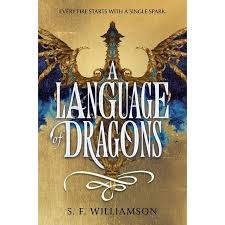
Book Review: A Language of Dragons – by S. F. Williamson

Exciting debut novel. Placed in 1923 London, this alternate history blends dragons with fantasy, civil unrest, a budding romance, and a corrupt government.
In an oppressive society split into three classes, Viv is racked with guilt over getting her best friend sent down to Third Class. Now her biggest worry is getting a summer internship to study dragon languages and keep her little sister safe. But her life takes a sharp turn when her parents and cousin are arrested and a civil war breaks out.
S. F. Williamson does an excellent job creating multiple dragons and dragon cultures, weaving them seamlessly into a world where dragons and humans have a tenuous peace. I look forward to reading the next book.
-
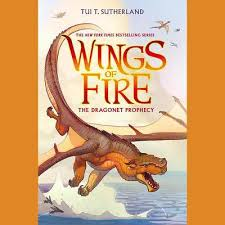
Book Review – The Dragonet Prophecy – Wings of Fire Book #1

The Dragonet Prophecy by Tui T. Sutherland, is an intriguing story about a group of five dragonets that have been raised in isolation so they can fulfill a prophecy that they end the war.
Clay is a mudwing dragonet, but he knows next to nothing about his own people and how they live. He is determined to protect his friends and prove that he isn’t the vicious killer their guardians believe his is. When the dragonets leave the safety of their cave, they are thrust into a cruel world where the different dragon species are divided behind the three sister dragons vying to be crowned the ultimate ruler.
The different types of dragons and their cultures in this book are fascinating. I loved the interactions between the dragonets and how Clay keeps them together. There were several twists and revelations. I look forward to reading the next book in the series.
-
To AI or Not to AI: The Question of Our Age

There’s been a lot of talk lately about the use of AI in the literary world. Some say it’s okay, right? Well…. There are a few things you should know before you dive into this technology.
In training their artificial intelligence platforms, the creators of AI software used other people’s writing without permission. By that, I mean they did not ask authors or even publishers if they could use the work. They did not purchase any of these books. They simply stole writing from authors. We are not talking about pieces that are out of copyright and in open domain, but contemporary books from authors currently writing and selling their creations. These are facts. I know authors affected by such theft.
Publishing is hard and costs money, especially if you are self-publishing. There’s professional editing, ISBN numbers [unless you are using the free ones from Amazon, but then big bookstores and independent bookstores won’t carry your books], printing, and the dreaded marketing. And what best sells your book? Why a cover of course, and purchasing a cover can be expensive, although I have seen some as low as $50. This all makes using AI to generate your cover very tempting. Which brings me back to how they trained that AI.
Stop now and ask yourself, how did they teach those machines? They took images from museums and from all over the internet, including art for sale and personal photos, without asking permission. I majored in Art [MFA Sculpture w/ceramics minor] so perhaps I have a slightly biased opinion, but this rankles the artist in me.
Let’s say you used AI to create your cover. Can you copy-write that creation? The answer is no. Legally it is not your art. You did not create it; it was generated by someone else. In this case an AI. Should you mention that on your copyright page? Yes.
I get the need to watch budgets. When I published my short stories, I created the covers using a program called GIMP, which is a free photo manipulation program. It is similar to Adobe Photoshop. I’m not going to go into the details of how it works here, that would be another article. I use my own photographs or get permission from other photographers to use theirs. The rest is drawn using the tools in the program. Even with the benefit of an art background, which gives me a slight edge, it is still hard work. I am proud of what I create.
Now let’s look at publishing markets. When AI-generated writing first came out, it wasn’t particularly good, but that didn’t stop people from inundating publishers with their dreck. So much so that many publishers were forced to temporarily close their doors to submissions while they figured out a way to sort through them. Now, every one of the markets I have seen clearly states that they do not accept anything AI generated; so, you had better check where you want to submit before jumping into this technology.
Within MWA, AI generated writing and art cannot be submitted to Pen in Hand. Nor are they eligible for our contests. Even Amazon now asks if AI was used. Authors are also adding language to their copyright pages explicitly saying their work may not be used to train AI. Here is an example:
“No part of this book may be used or reproduced in any manner for the purpose of training artificial intelligence technologies or systems.”
AI and its use in various markets is rapidly changing. You will have to decide where you stand, but really, why would you want AI to do your work? The whole reason I became a writer/artist was to bring my creations to life and share them with the world. Yes, it’s hard, and I’ve struggled at times, but creating is what I do. Why hand that off to a machine? I can see where it may be helpful to generate a writing prompt, but any writing should be done by you. Images should come from you, not a program. You are the creator. Leave the AI for self-driving cars and medical procedures.
This article was originally published in the Maryland Writers’ Association 2025 Spring Newsletter.
Resources:
Science Fiction and Fantasy Writers Association (SFWA) Statement on AI/ML Use
SFWA Members Weigh in on AI & Machine Learning Applications & Considerations
Writer Beware: Turning Copyright on Its Head: The UK’s Proposed AI Copyright Exception
“Clause Relating to Authors’ Use of AI
Authors shall not be required to use generative AI or to work from AI-generated text. Authors shall disclose to Publisher if any AI-generated text is included in the submitted manuscript, and may not include more than [5%] AI-generated text.”“Cover Design Clause (For Book Contracts)
Publisher agrees not to use AI-generated images, artwork, design, and other visual elements for the book cover or interior artwork without Author’s prior express approval. For purposes of clarification, a human designer may use artificial intelligence technologies as a tool to assist in the creation of artwork for the Work, provided that the human artist has control over the final artwork and the artwork substantially comprises human creation.”Creative Rights in AI Coalition
More than 40,000 people have signed the Creative Rights in AI Coalition’s Statement on AI Training, which calls for the end of unlicensed use of creative works by GAI companies.
https://www.aitrainingstatement.org/
Evolving AI Transparency: The Generative AI Copyright Disclosure Act
https://katzarov.com/evolving-ai-transparency-the-generative-ai-copyright-disclosure-act/ which requires GAI companies to disclose their use of copyrighted works
Gov.UK
Open Consultation: Copywrite and Artificial Intelligence. Published Dec. 17, 2024https://www.gov.uk/government/consultations/copyright-and-artificial-intelligence/copyright-and-artificial-intelligence
-
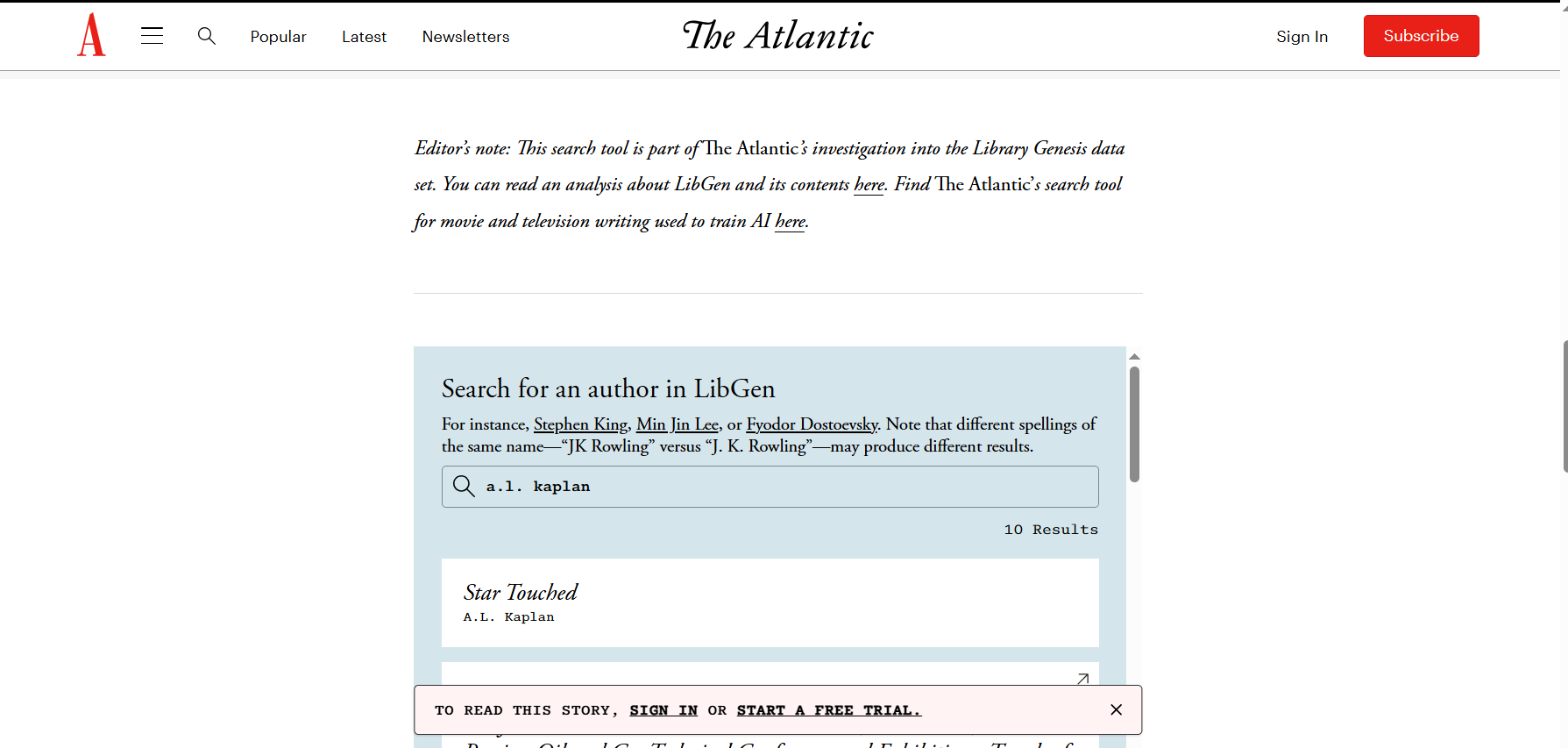
AI Training Theft
For those of you still wondering why authors are so angry about AI:
Meta pirated millions of books to train its AI.
I just checked the list of books on LibGen, that were used.
Guess what showed up.

This is theft.
They stole my work without permission or compensation.
If you are an author, you might want to check the database.
Then go to the Author Guild and follow their instructions to file a complaint.
-
Free Speech Doesn’t Matter For Some News Agencies
In case you hadn’t heard:
Jeff Bezos, the billionaire owner of the Washington Post, announced on Wednesday that the newspaper will only publish opinion pieces that conform to his political ideology.
What this means is that they won’t publish any opinion but his. I guess that makes it an un-opinion section since it doesn’t reflect all sides. It is a not so subtle attempt to stifle any opinion he or this administration don’t agree with. To deny any opposition or opposing thoughts.
So much for free speech.
In response, David Shipley, the editor of the Washington Post’s opinion page, resigned. At least we know he has some integrity.
This is how democracy dies.


