Tag: Orkney

  • My Trip to Scotland: Part 7 – Italian Chapel, Smoo Cave, Ardvrech Castle, and Ullapool

    My Trip to Scotland: Part 7 – Italian Chapel, Smoo Cave, Ardvrech Castle, and Ullapool

    On our way out of Orkney on August 5th, we stopped at the Italian Chapel. It was built by Italian prisoners of war during World War 2. This unassuming little Catholic chapel was beautifully painted inside.

    There was a sculpture outside the church.

    Sands of Wright and Dam of Hox were pretty.

    I also tried some Irn Bru. This caffeinated orange colored drink, known as Scotland’s other national drink after Scotch whisky, was good with a slight bubblegum like flavor.

    Some pictures at Kyle of Tongue in northwest Highland.

    Smoo Cave was neat! But the walk down to it was steep.

    Smoo Cave is a sea cave and a freshwater cave. Unfortunately, it’s been a bit dry, so the waterfall in the cave wasn’t flowing. It was still very pretty.

    So was the surrounding area.

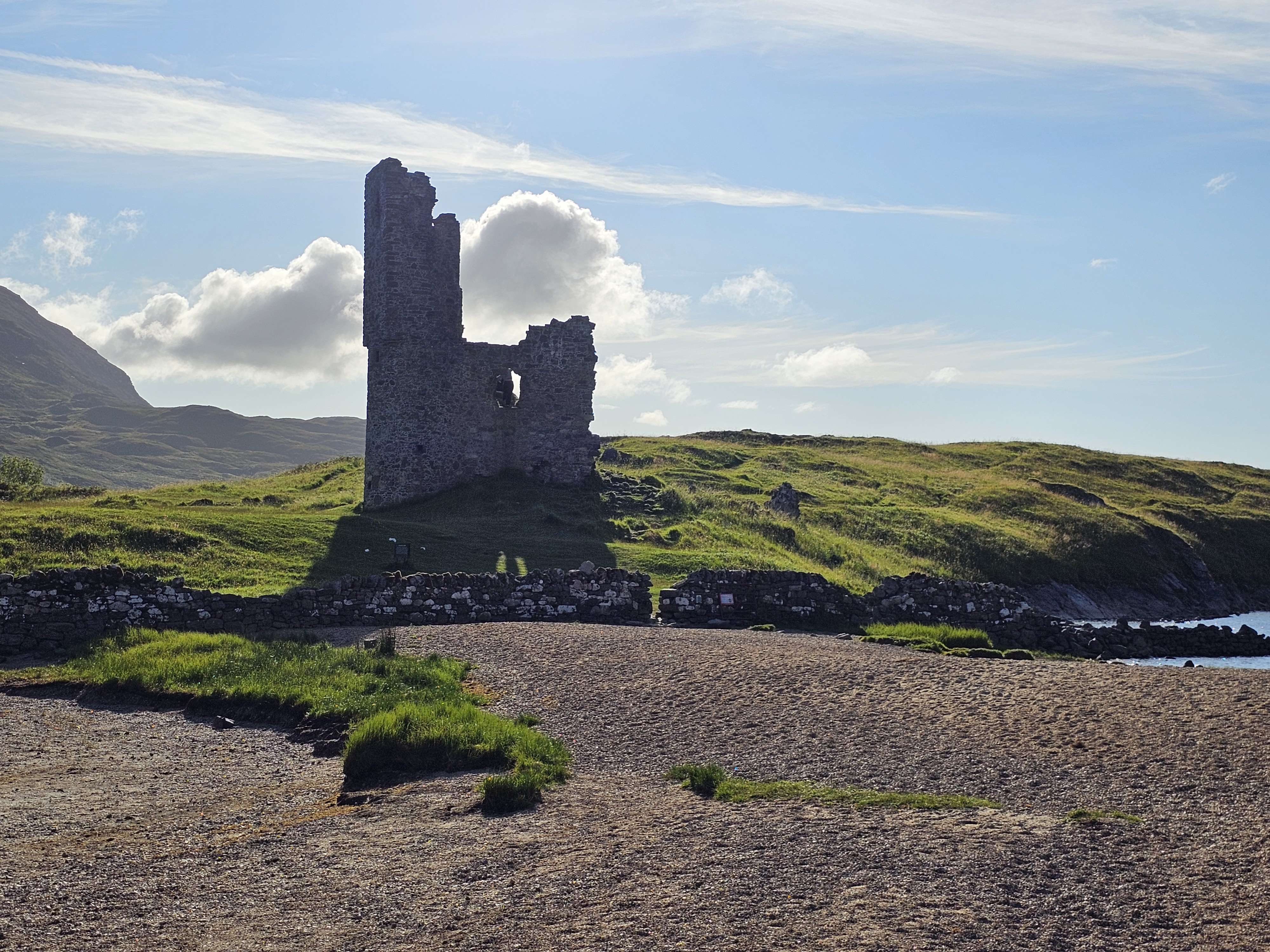
    We stopped at Ardvrech Castle and the Calda House by Loch Assynt. At least what was left of them. The castle was built around 1490 by the Mcleods. The Calda house was built in 1672.

    Then it was off to Ullapool for the night. We didn’t get there until almost 7:30 and wanted to go to the Seafood Shack for dinner. They close at 8:00 and we were warned that they close early when they sell out. We dropped our bags and walked quickly. The langostinos were wonderful. They look like miniature lobsters. Sorry, I didn’t get pictures of the food. There was no wind and that night and the midges came out in force. (Tiny, gnat-like flies that bite. It was the one time we didn’t have the bug repellant with us. Figures. We ate as quickly as possible and fled to our room.

    On the way back, I spotted this sign down the road from our bed and breakfast. I’m a huge Lord of the Rings fan and couldn’t resist taking a picture.

  • New Information on the Stonehenge Altar Stone

    New Information on the Stonehenge Altar Stone

    Remember my post the other day on the Ring of Brodgar? In August an article came out saying that analysis showed that the grey-green sandstone of the altar stone at Stonehenge came from northern Scotland, possibly Orkney? Well, now new information has surfaced. They still think it came from Scotland, but have determined that it did not come from Orkney.

    You can read the articles here:

    CNN: https://www.cnn.com/2024/09/13/science/stonehenge-altar-stone-orkney/index.html

    BBC: https://www.bbc.com/news/articles/cx2g55ly0e6o

    The mystery continues.

  • Post 4: My Trip to Scotland: Part 4 – Stones of Stennes & Maes Howe

    Post 4: My Trip to Scotland: Part 4 – Stones of Stennes & Maes Howe

    Since my first art history class in collage, I’ve been fascinated by paleolithic and neolithic art. Stone circles like Stonehenge were important to the first novel I wrote. (still unpublished) So when I say August 4th was the day that I was most looking forward to, I mean it. (Don’t believe me? Look at the header on my homepage.) This trip was a dream come true. We were transported in spirit back thousands of years and treated to wonder after neolithic wonder.

    The first stop was at the Standing Stones of Stenness. This is the oldest henge in the British Isles and is only five miles northeast of Stromness on the mainland of Orkney. It originally held 12 stones, but only four upright stones are still standing. They are 6 meters high. The people who built this did not have fancy machinery and trucks. All these stones were hand quarried and hauled there. Local outcry stopped the farmer from pulling them down in 1814! He was tired of ploughing around them. Unfortunately, the Odin Stone was already destroyed.

    According to local tradition, a couple who held hands through the hole in the Odin stone would be bound in marriage.

    Maes Howe doesn’t look like much from the outside, but there is magic within. Built around 3000 BC, Maes Howe is a burial chamber that is accessed by a nine-meter-long tunnel. When it was opened in 1861, the excavators discovered it had been previously visited over 800 years earlier. How did they know this? The interior is covered in a collection 30 runic graffiti and animal carvings.

    According to stories, in 1153, a group of Vikings took refuge during a snowstorm.

    Some of the inscriptions read: “Ofram the son of Sigurd carved these runes” “These runes were carved by the man most skilled in runes in the western ocean” “Ottarfila carved these runes”“Tholfir Kolbeinsson carved these runes high up” “Orkis’ son says in the runes he carves”

    There were a few other, more ‘colorful’ inscriptions, but you get the idea. Basically, bored guys haven’t changed in thousands of years.

    These are a few pictures of the landscape around Maes Howe.

  • My Trip to Scotland: Part 2

    My Trip to Scotland: Part 2

    August 2nd began our five-day tour through the Highlands and up to Orkney Island. If you’ve ever tried to drive on a narrow winding one lane road over hills in a foreign country, you know why we chose to do a tour instead of renting a car. It was well worth it!

    Along the way we learned a lot about Scottish history and saw some beautiful sights.

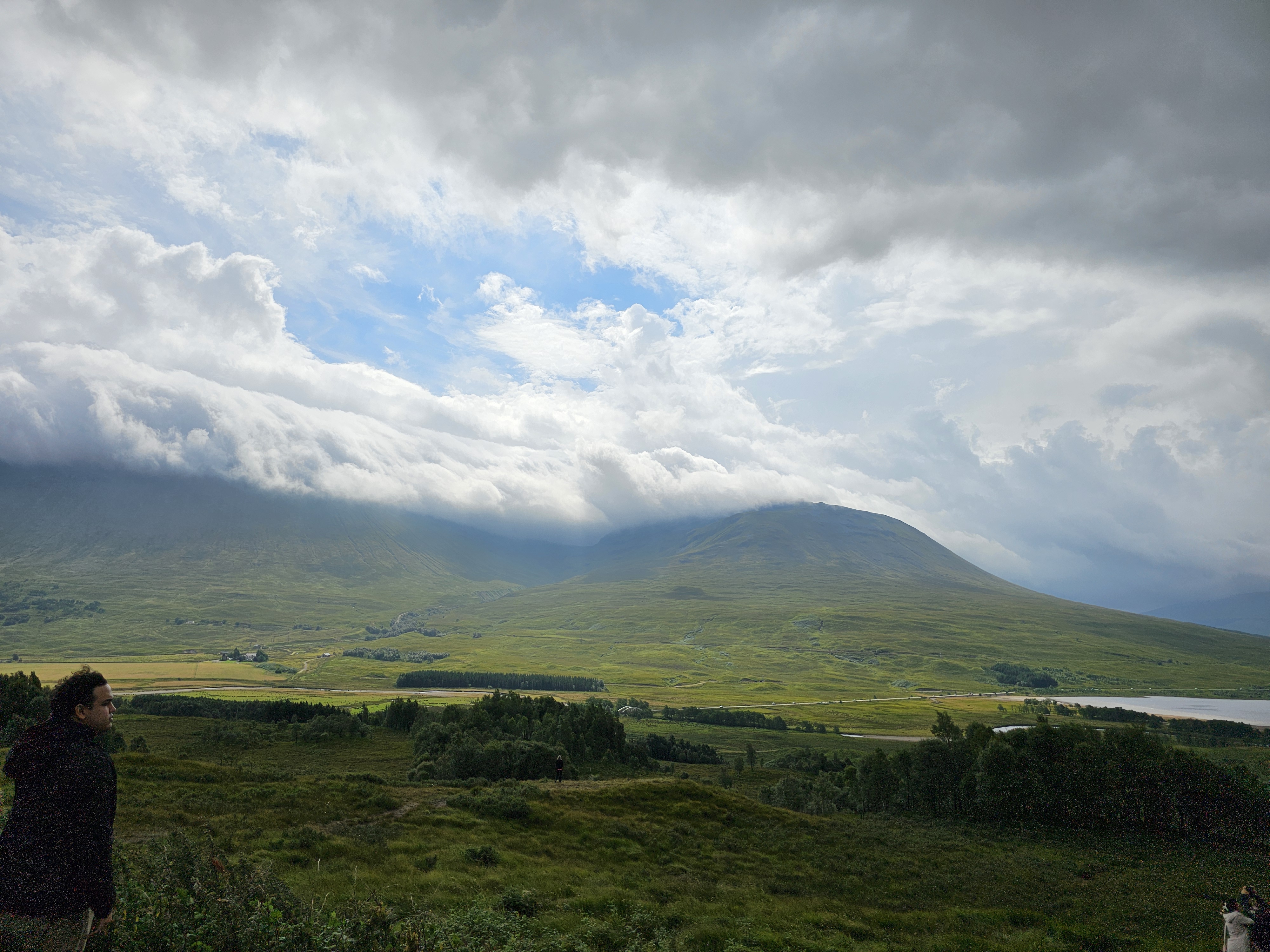
    The drive took us through Glencoe in the Highlands, site of the Glencoe massacre. In 1692, men, women, and children of the MacDonald Clan were murdered in their sleep by troops of the Clan Campbell. It was ordered by the government but violated clan hospitality that Clan Campbell had requested because of a winter storm.

    We drove past Ben Nevis Mountain, the highest point in Scotland.

    And through Loch Lomond National Park.

    Of course we stopped at Loch Ness. Nessie didn’t make an appearance, but we did see some brave swimmers in the icy water.

    Inverness is on Scotland’s northeast coast, where the River Ness meets the Moray Firth. It’s the largest city and the cultural capital of the Scottish Highlands.

    We got to spend the evening there.

    I even found some wolves on a church along with some other critters.

    Dinner was a MacGregor’s Bar which had this lovely quote from Sir Walter Scott.